
To understand Japanese culture, you need to explore the wealth of history in the region of Kansai. The best way to do so is to visit Shinto shrines and Buddhist temples. They stand as some of the oldest remaining structures in the country.
In the old capital of Kyoto alone, there are over 400 shrines and 1600 temples. With so many options to choose from, it can be daunting to choose which to visit with limited time on your trip! Fortunately, we’re sharing some of the most unforgettable shrines and temples in the Kansai region that you should not miss.
But before visiting any of these sacred places, it’s good to understand the proper etiquette first. That way, you can be a responsible visitor and not be disrespectful of the culture. Check out our article on How to Explore Japan’s Temples and Shrines Like a Local. There, you’ll learn everything you need to know!
Fushimi Inari Shrine
Fushimi Ward, Kyoto
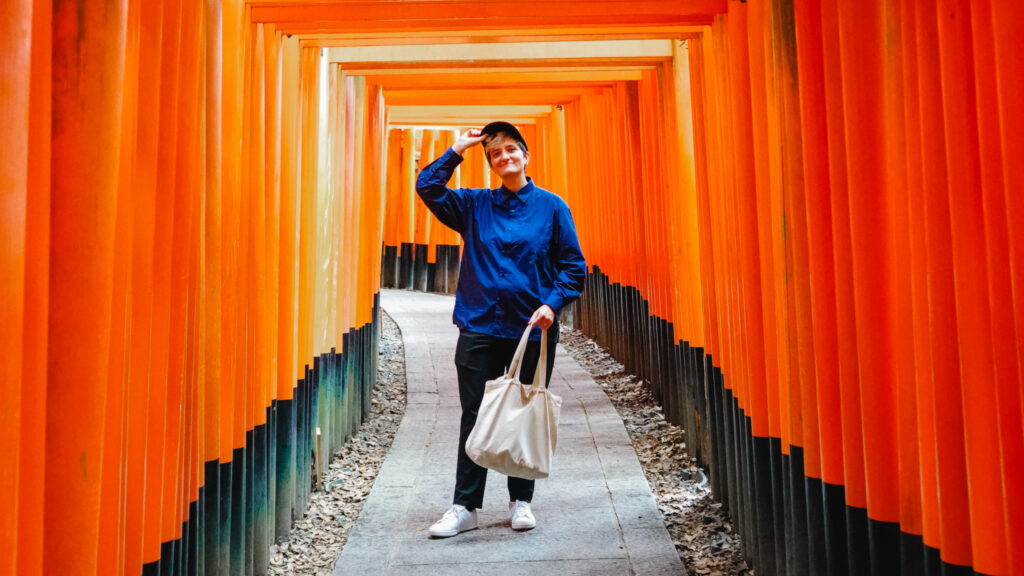
Even if you didn’t know it by name, you’ve definitely seen this shrine before! With thousands of iconic vermillion red torii gates, this is arguably the most recognized shrine in all of Japan.
For over 1300 years, the resident kami, Inari Okami, has been revered at Fushimi Inari as the Shinto god of rice. Journeying up the mountain through the 10,000 torii gates has become a pilgrimage for both Japanese people and tourists alike.
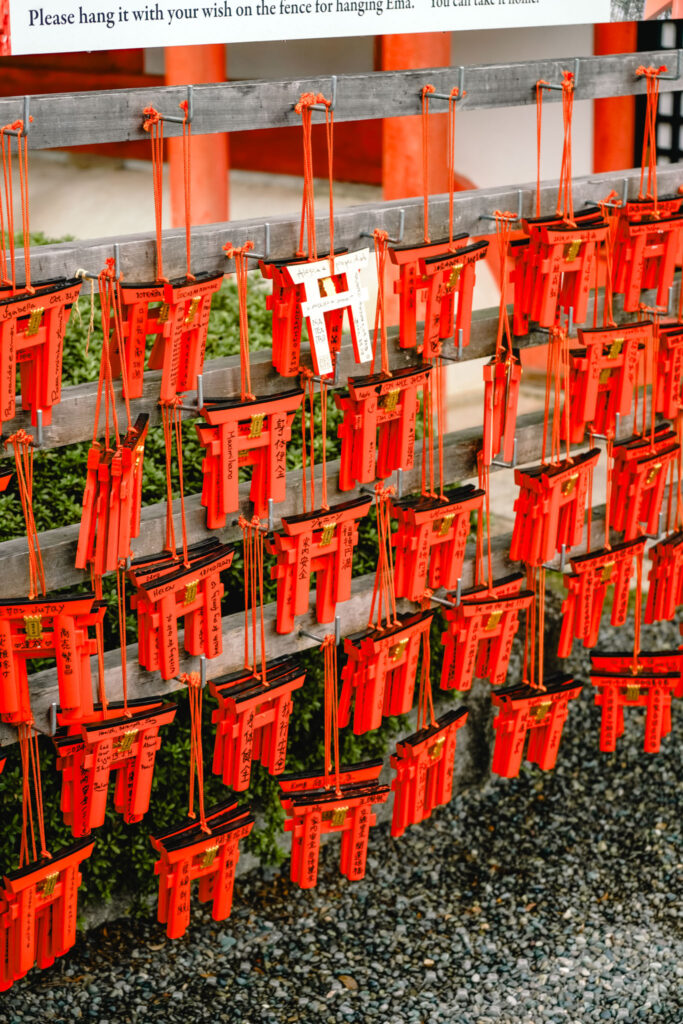
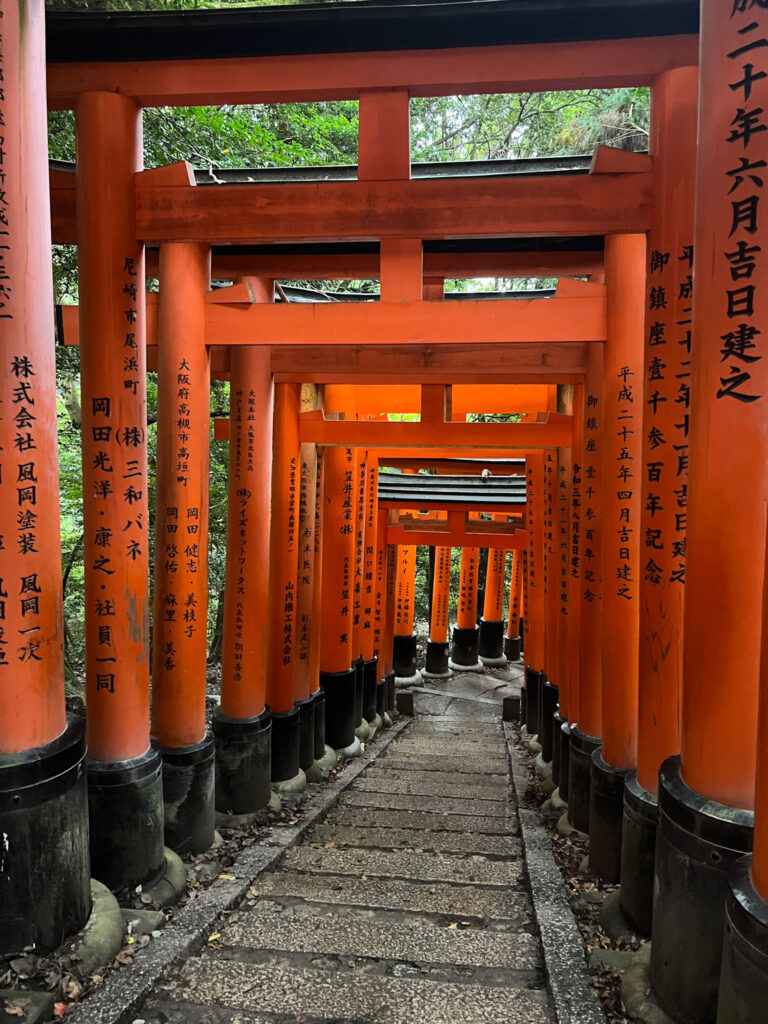
However, being the most recognized also means it’s also the most overrun with tourists. By midday, tourists flood the grounds and overcrowding can make for an experience that’s everything but spiritual. Also keep in mind that peak season is in November.
For those seeking an ideal photo opportunity, arrive early between 6 AM and 8 AM to avoid the heavy crowds. Crowds also tend to thin out the higher you climb up the mountain. Further up, there’s even some wiggle room to set up a tripod. On the other hand, you can save taking pictures for the very end. There’s a separate tunnel of torii gates for those exiting.
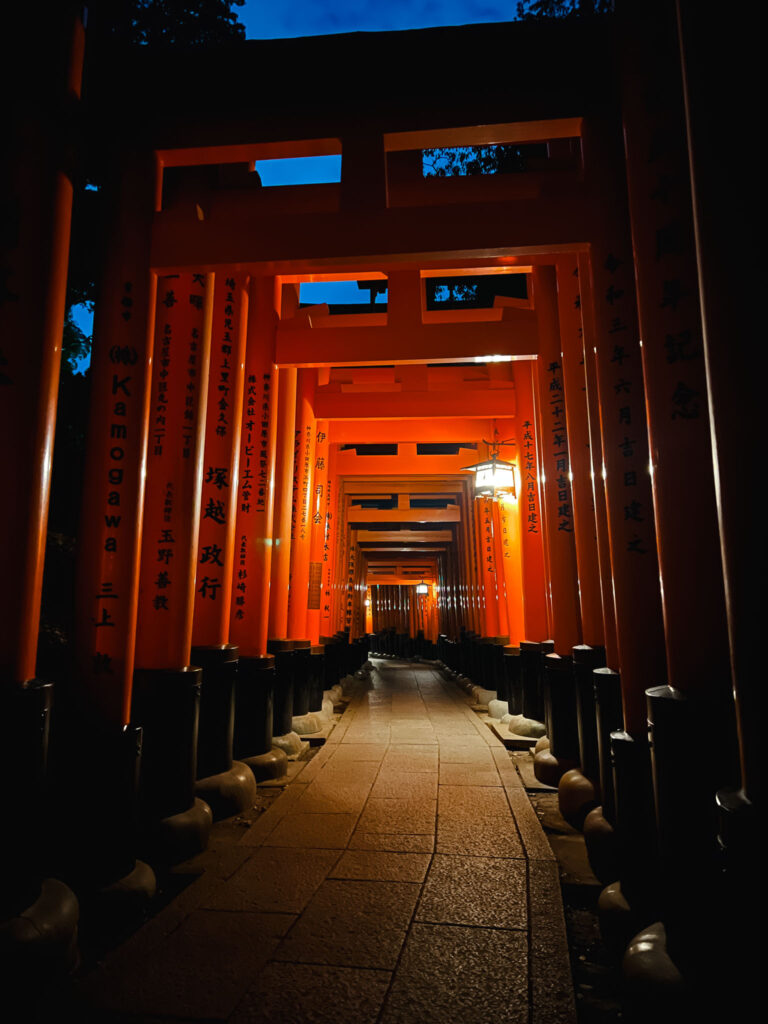
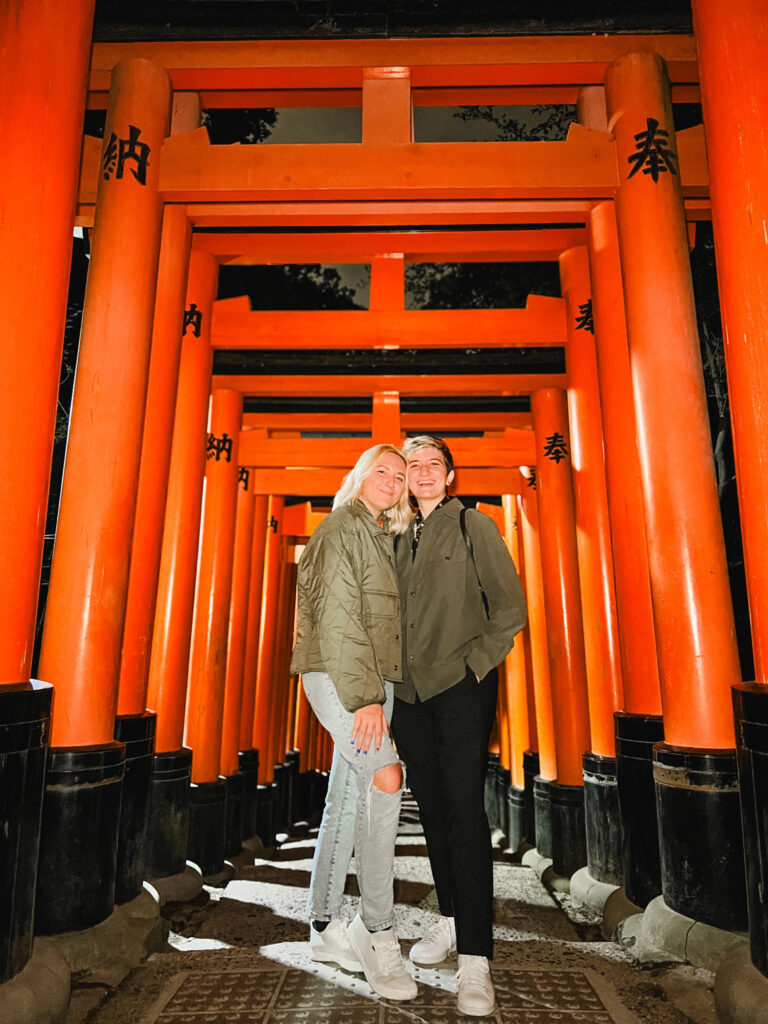
If taking photos are of little personal significance and you just want to enjoy tranquility, head to the shrine after nightfall. Most temples and shrines have 24/7 access and you can come and go freely. The only exception is that souvenir booths close in the evening, so buy gifts during the day. We ventured to Fushimi Inari after dinner with friends and it was a wonderful opportunity to experience serenity all to ourselves!
Yasaka Kōshin-dō Temple
Higashiyama Ward, Kyoto
Instagrammers and rainbow chasers, we have the temple for you! Just around the corner from the famous Hōkan-ji pagoda of Gion, blink and you might otherwise miss the small temple of Yasaka Kōshin-dō. Look for the tiny, albeit bright orange torii gates surrounded by kimono rentals and shops. What you’ll find within is easily the most colorful temple we visited while in Japan!
The temple honors the Sanzaru, the three wise monkeys. They represent “see no evil”, “speak no evil”, and “hear no evil”. Certainly, there’s no evil to be found here – only whimsy!
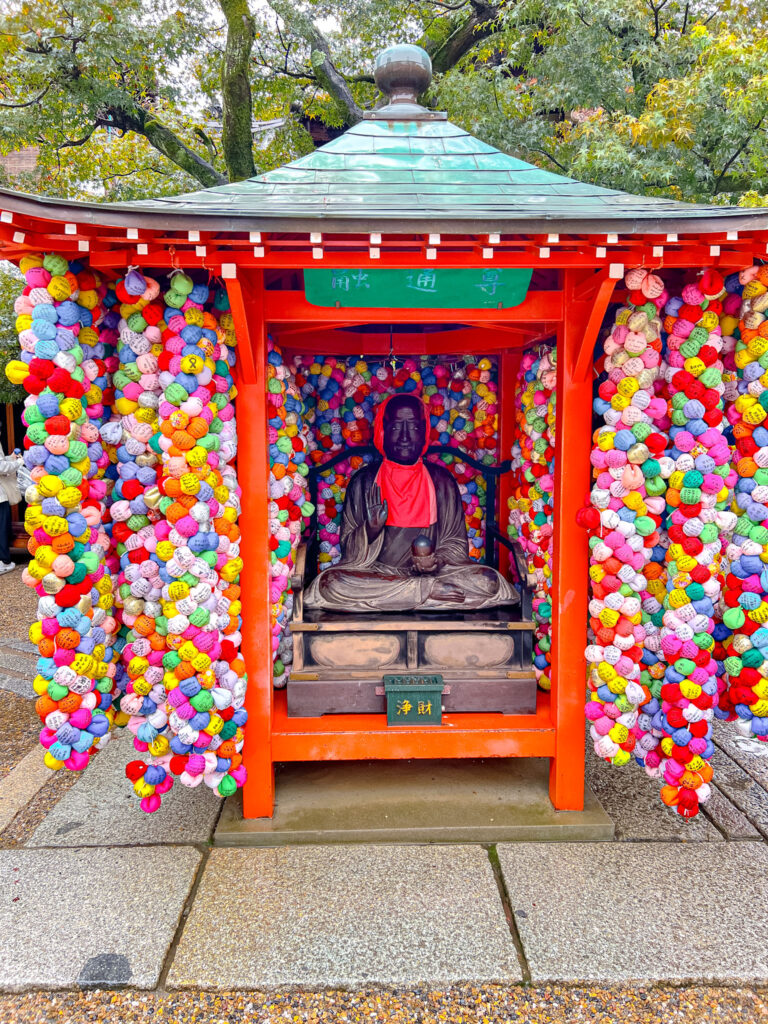
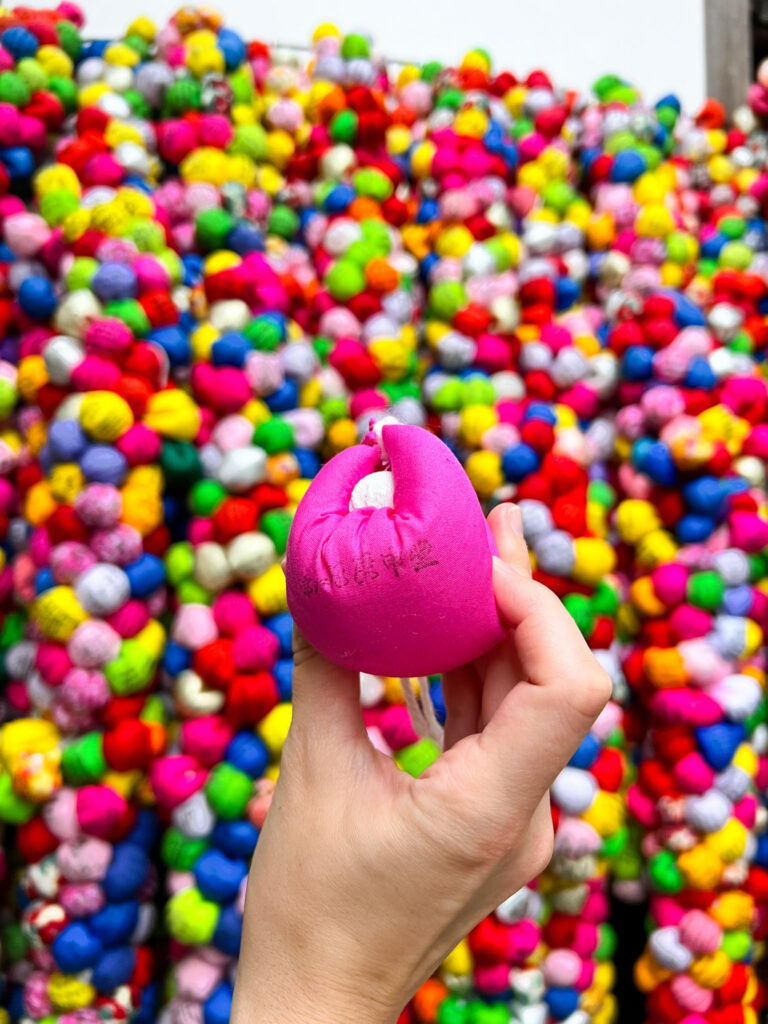
Ema are plaques of prayers or wishes that visitors write upon and then hang around shrines and temples. While usually made of wood, the ema at Yasaka Kōshin-dō stand apart and are truly unique! Here, the ema are made of colorful cloth representing kukurizaku, “monkeys” with bound hands and feet. The stacks of ema hang from strings and form beautiful rainbow pillars throughout the shrine. Write your prayer or intention on your own ema and add to the rainbow!
Adashino Nenbutsuji Temple
Saga-Arashiyama, Kyoto
The Arashiyama area of Kyoto is one of the most popular tourist destinations in all of Japan. It is home to the Arashiyama Bamboo Grove, a dense forest of mōsō bamboo that attracts thousands of daily visitors. So many visitors means claustrophobic conditions. If you’re seeking a more tranquil experience in the bamboo, we have the perfect alternative!
From the main area of the bamboo forest, head north and stroll through the neighborhood of Sagatoriimoto Kozakacho. The most charming shops, cafes, and soba restaurants line the street, perfect for a midday sightseeing pitstop.
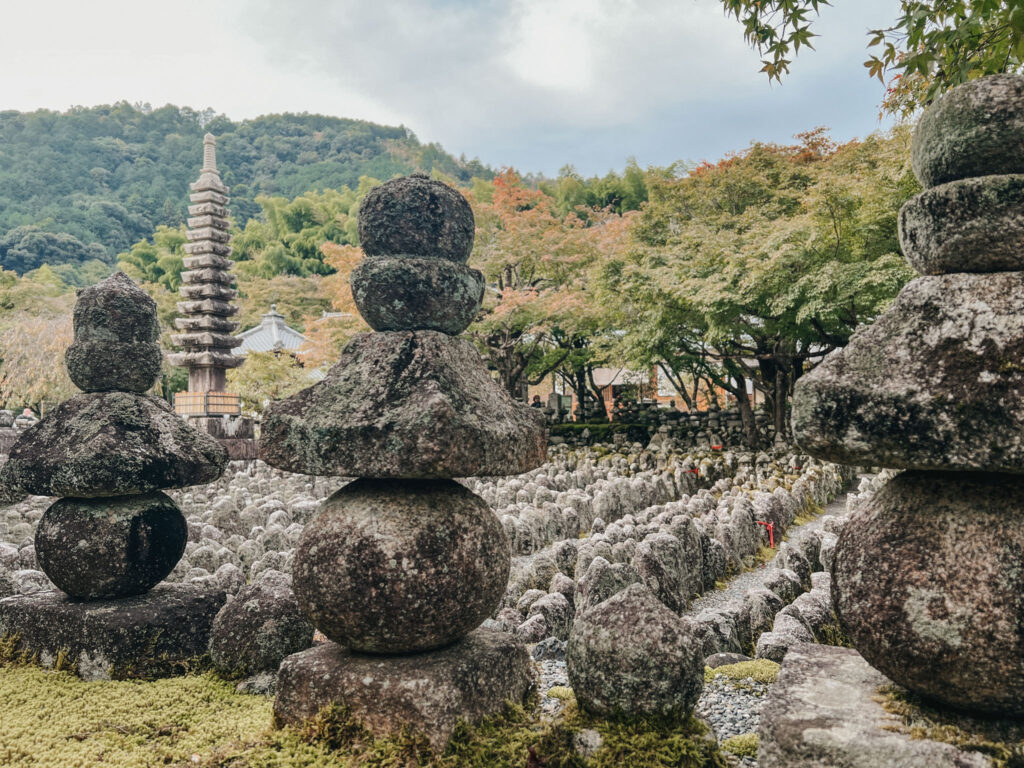
30 minutes later, you’ll arrive uphill at Adashino Nenbutsuji Temple. Admission runs 500 yen for adults and what you’ll find is worth all of those steps. In the main section, 8000 stone statues and pagodas span the expanse of the grounds. Each one represents a soul who died without kin.
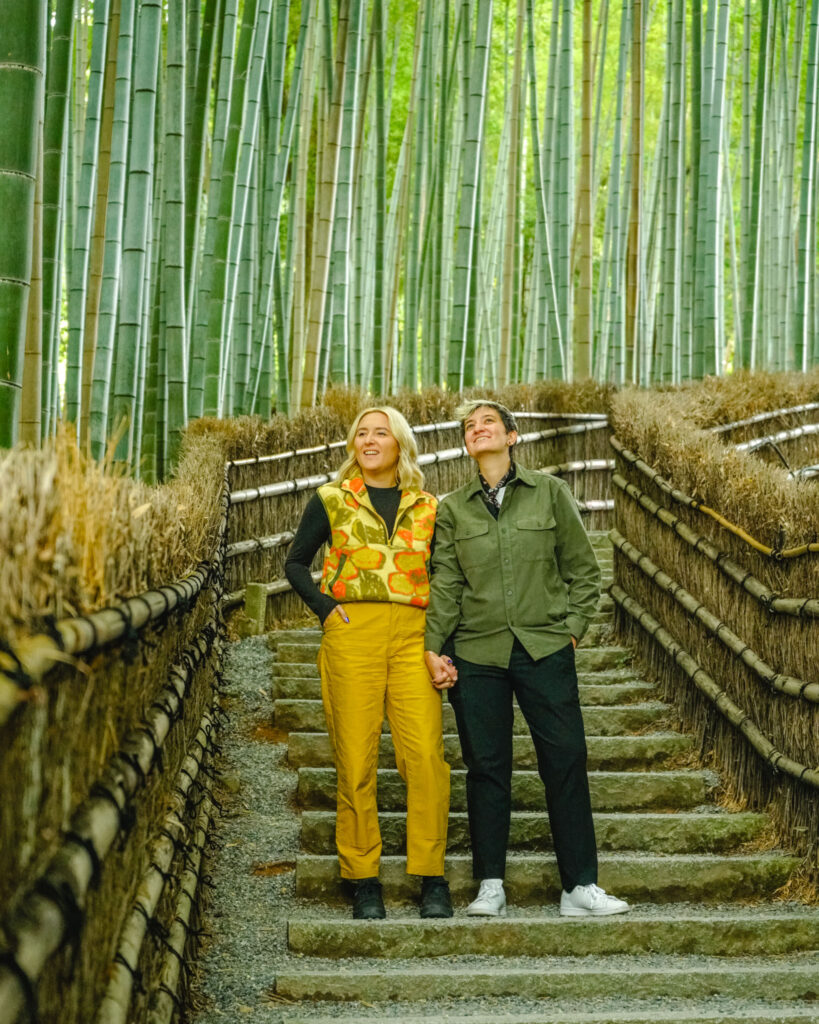
Tucked away in the far corner of the temple grounds, you’ll finally find the alternative to Arashiyama Bamboo Grove. It may be much smaller – however, it’s definitely far more doable. A bamboo forest called Chikurin offers an Insta-worthy pathway.
Most folks neatly form a queue – a far less stressful photo spot compared to Arashimaya forest. Unfortunately, not every tourist is a kind one! We also found people carelessly walking through others’ photos or hogging the space. Arrive when the temple opens at 9 AM for the best conditions to take photos and video. Finally, just be courteous and don’t take up too much time!
Otagi Nenbutsuji Temple
Saga-Arashiyama, Kyoto
Next, ten minutes further uphill from Adashino Nenbutsuji Temples lies an eclectic temple that’s just as photographable, but arguably even more whimsical!
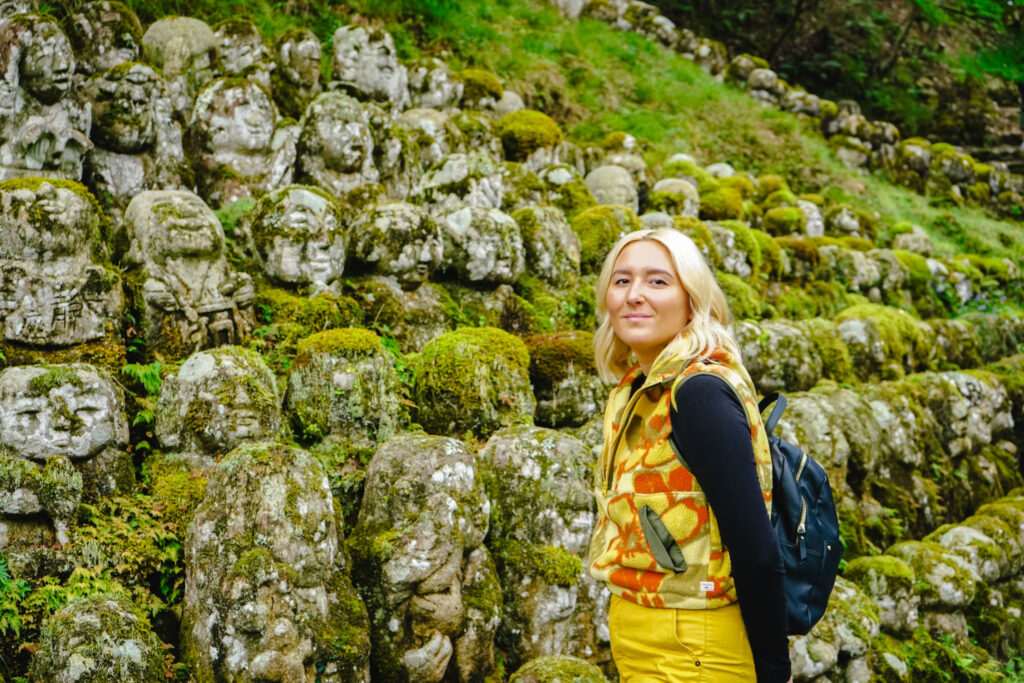
In 1955, sculptor Kocho Nishimura was appointed as the head monk and his hope was to breathe new life into the Otagi Nenbutsuji Temple. His project enlisted the help of everyday folks who wanted to learn how to carve and ultimately resulted in 1,200 hand carved rakan statues.
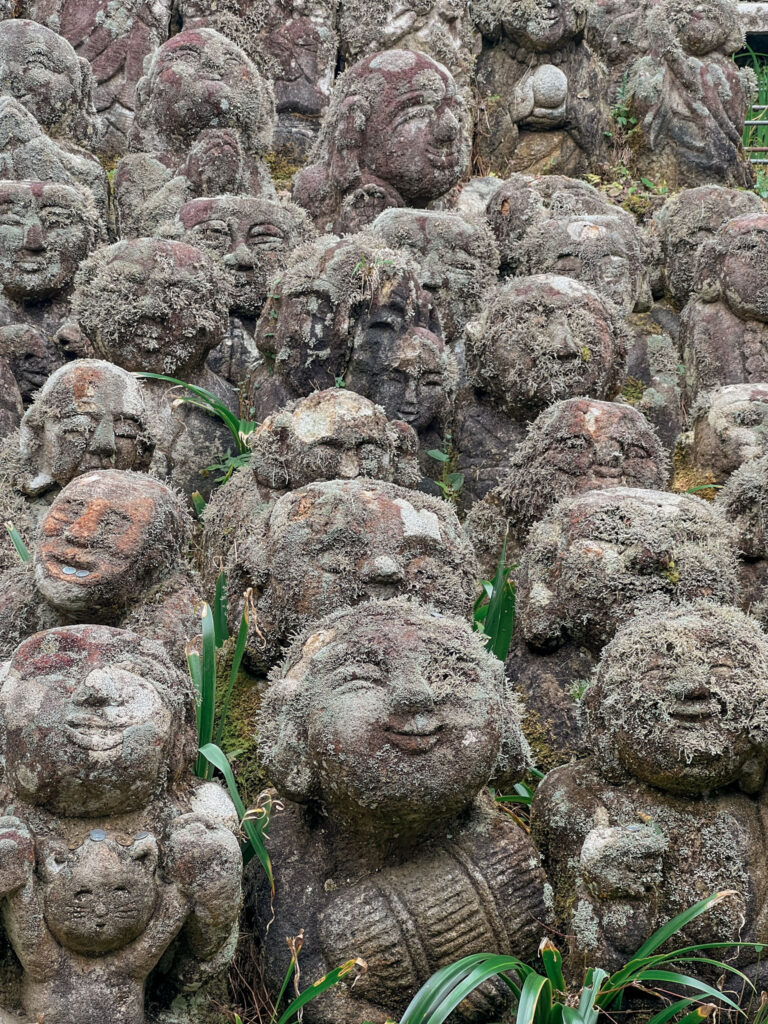
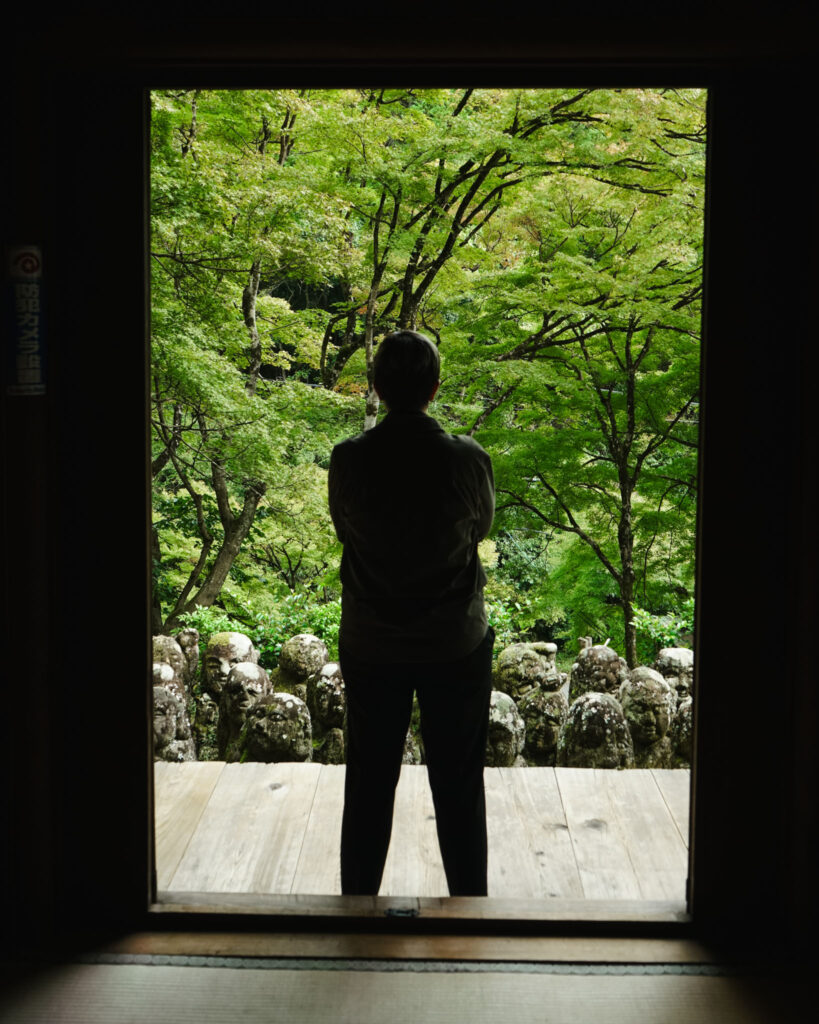
Today, the rakan statues lie covered in a layer of moss across the hillside. Each represents one of Buddha’s enlightened followers and each has a unique personality. Here, you’ll also have to pay a fee to enter, which will set you back 400 yen a person. Take your time and pay close attention because no two statues are alike!
Tsuyu-no-Tenjinja Shrine
Kita Ward, Osaka
Looking for love in all the wrong places? Or maybe yearning to look more beautiful? Then try your luck praying for true love or good looks at Osaka’s Tsuyu-no-Tenjinja Shrine. Nestled in Osaka’s busy district of Umeda, this shrine endures as a refuge for romantics.
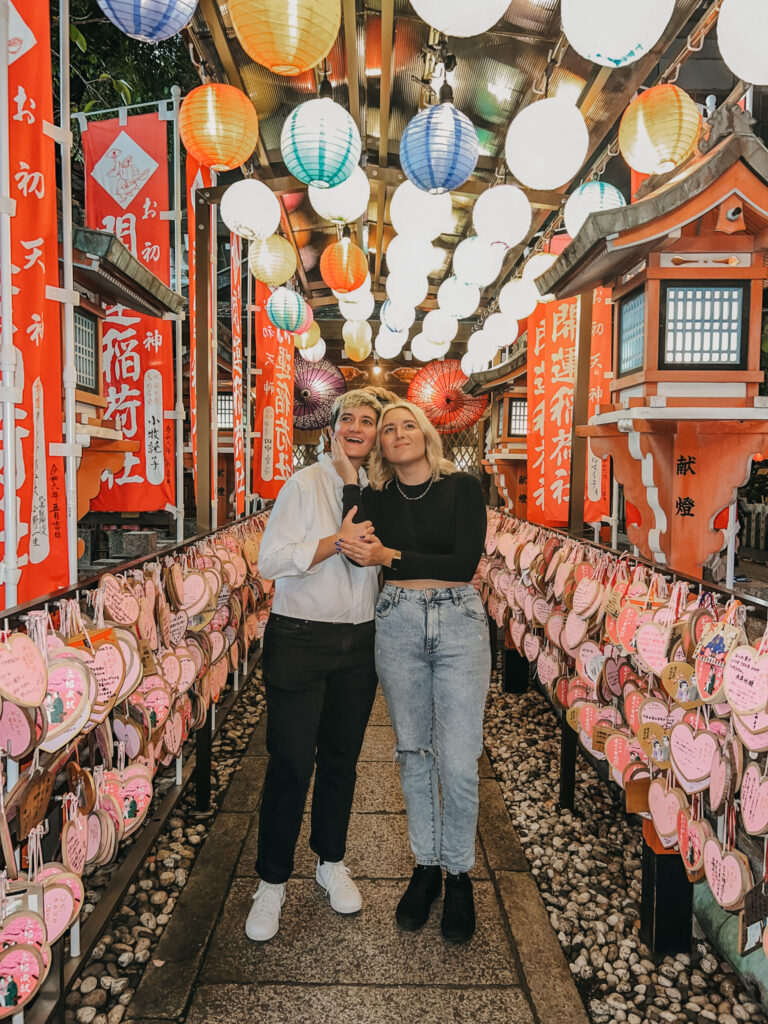
Tsuyu-no-Tenjinja is famously known as the setting for The Love Suicides of Sonezaki. It tells the tale of two star-crossed lovers who took their lives to realize their true love, unable to be without one another. Sound at all familiar? Fans of Shakespeare’s Romeo and Juliet will find striking similarities to the story. Today, tourists and locals alike revere the shrine as a sanctuary for love.
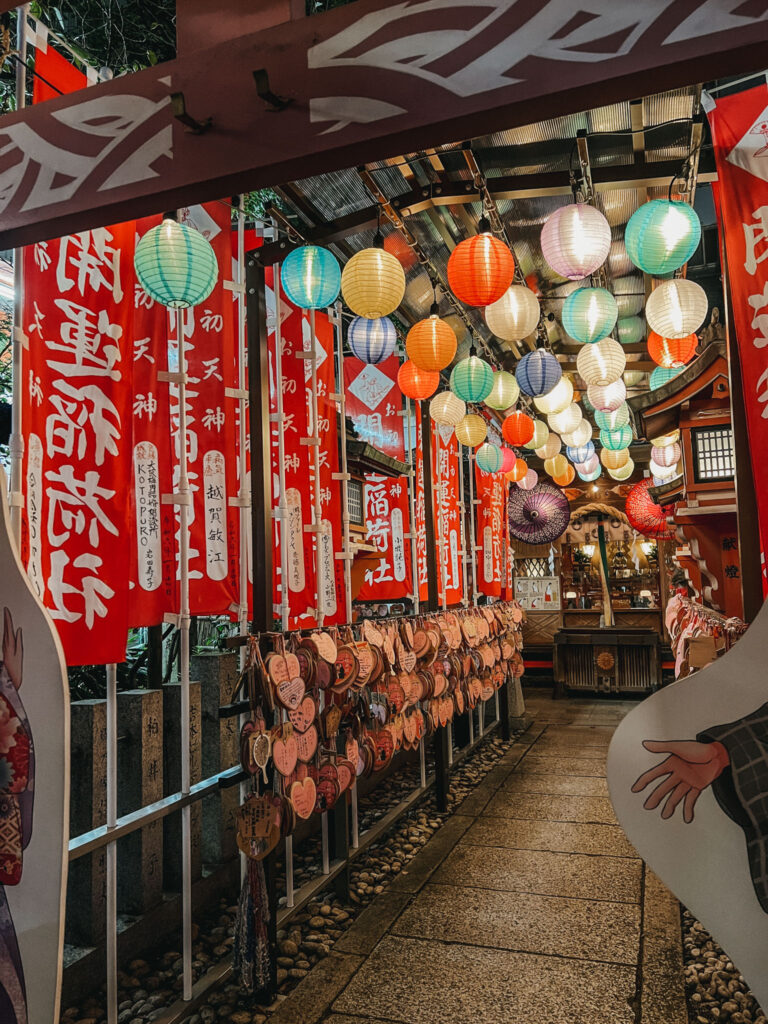
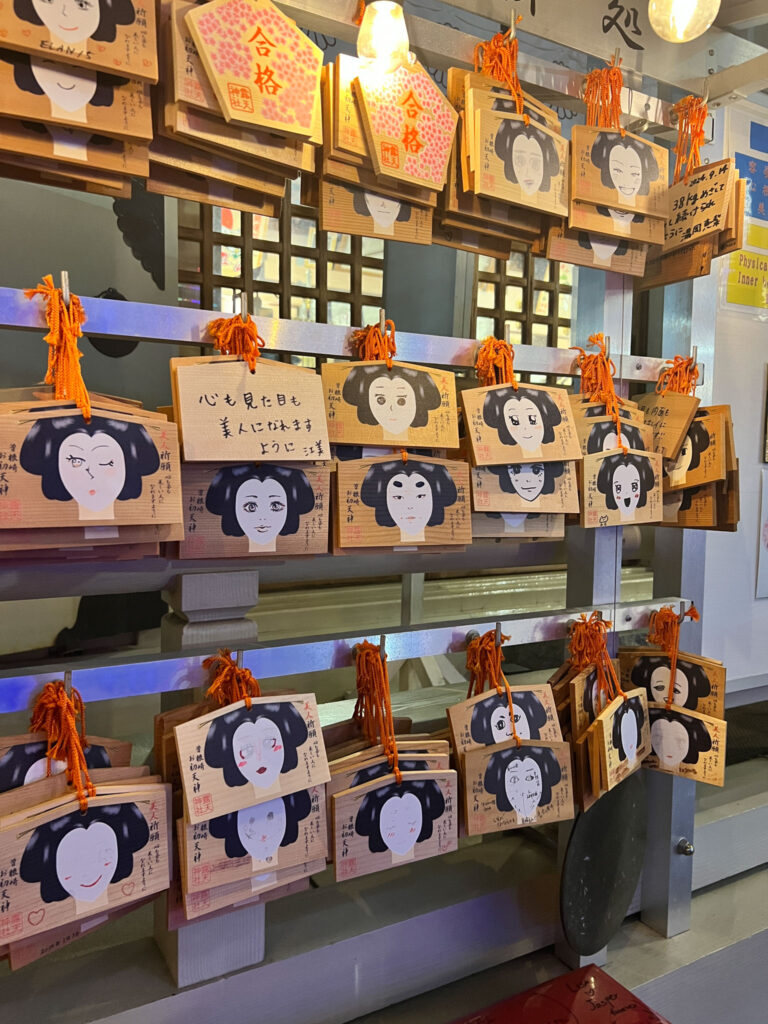
If you’ve already found love, Tsuyu-no-Tenjinja is also known for its blessing of bestowing beauty. To receive your own blessings, purchase an ema with the faceless geisha. Why is she faceless? It is up to you to paint the face! Leave your completed ema at the shrine to communicate your wishes of beauty with the kami. Tsuyu-no-Tenjinja is also a popular shrine to pray for fertility!
Namba Yasaka Shrine
Naniwa Ward, Osaka
You certainly don’t have to be in the countryside to experience the beauty of shrines or temples. In fact, Namba Yasaka Jinja is a perfect example of how Shintoism can coexist right in the middle of a big bustling city!
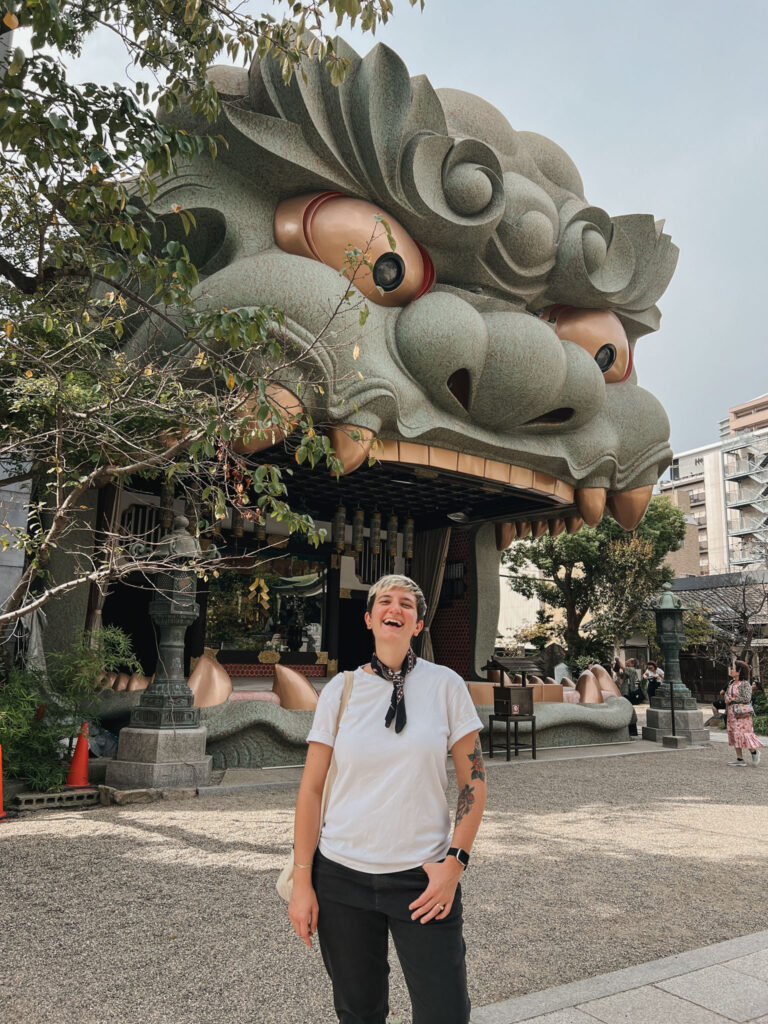
Less than a ten minute walk from Namba Station, this shrine feels like a spiritual oasis in the middle of Osaka. What exists on the grounds today is actually a post-war reconstruction after the original site burned down in 1945.
The most recognizable feature of the shrine is the iconic lion head that makes up Shishiden, the Lion Hall. Standing nearly 40 feet tall, its open mouth is meant to swallow any evil spirits around you. If you’re feeling weighed down with bad energy, disease, or maybe a hangover from an exciting Osakan night, bring your troubles to Namba Yasaka.
Tōdai-ji Temple
Nara Park, Nara
If you’re a chaser of all things remarkable, head to Nara Park for one of the most significant temples in Japan. The Tõdai-ji complex is not only a UNESCO World Heritage Site, but its Great Buddha Hall holds the largest bronze statue of the Buddha Vairocana in the world.
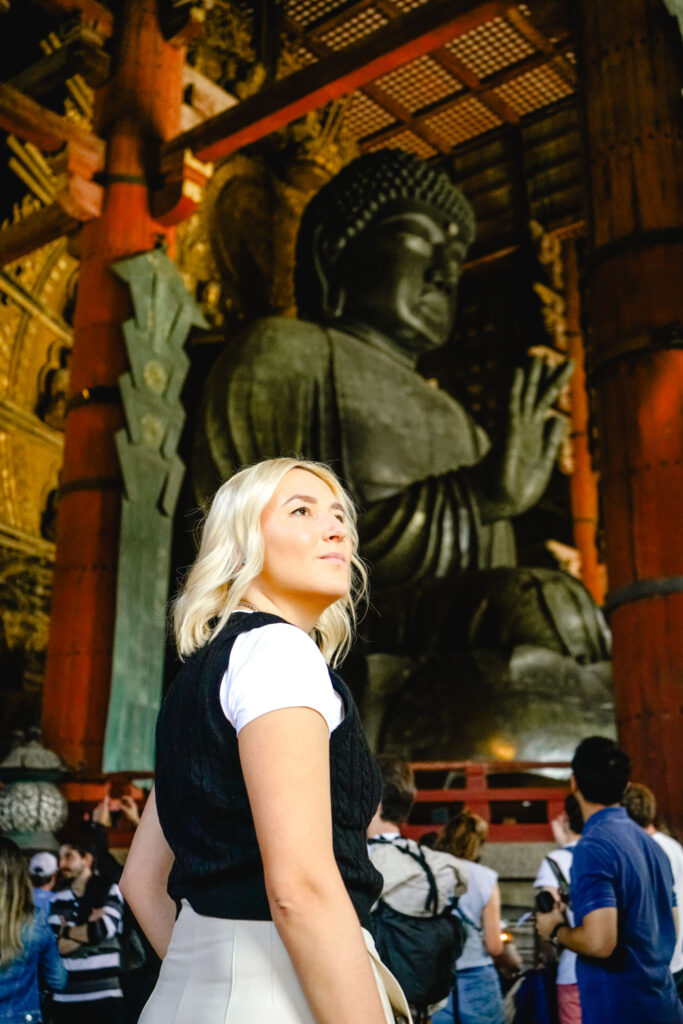
Admission runs 800 yen for adults to access the grounds of Daibutsuden, the full complex. Inside the main building, the Buddha statue sits at a whopping 15 meters (49 feet) tall. Its hand alone is far taller than any human adult! There’s plenty of room to walk around to get up close and personal with Vairocana.
Behind the Buddha statue, you’ll find a unique experience that’ll bring good luck… if you make it through! At the base of a wooden pillar is a hole that’s said to be the size of the Buddha’s nostril. Successfully crawling through it means that you’ll be blessed with enlightenment in your next lifetime!
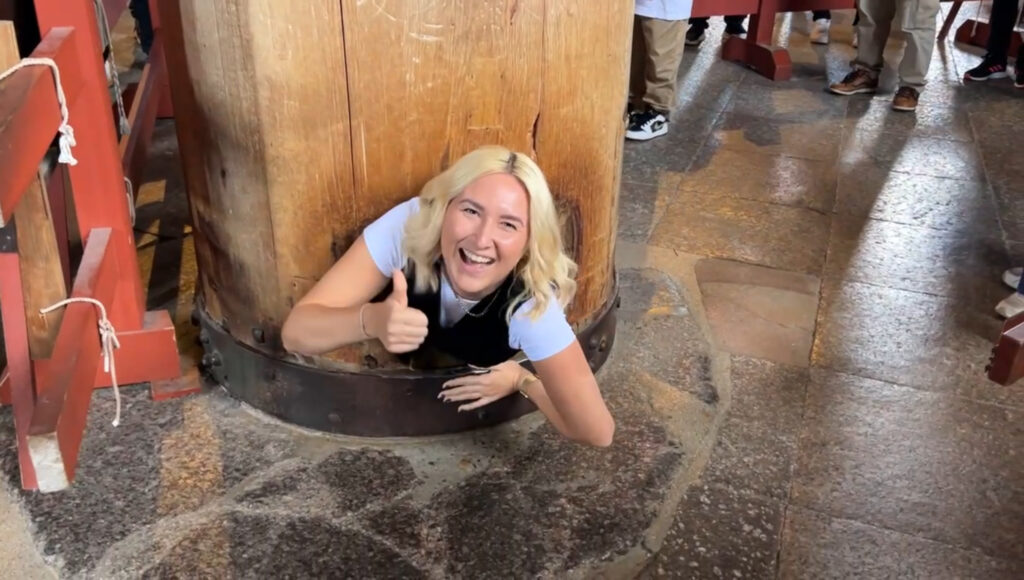
While Alex opted out of it, Chris was the only adult woman to crawl through successfully while we were there. Afterwards, she was greeted by local exclamations of “sugoi!”. Catch her in the next lifetime to see how that enlightenment is doing!
Nigatsudo Temple
Nara Park, Nara
Finally, within the Tōdai-ji complex of Nara Park, head further up the hill for a hidden gem past the occasional Sika deer for some of the best views of all of Nara await you! Folks that claim “every temple is the same” certainly haven’t experienced Nigatsudo Temple.
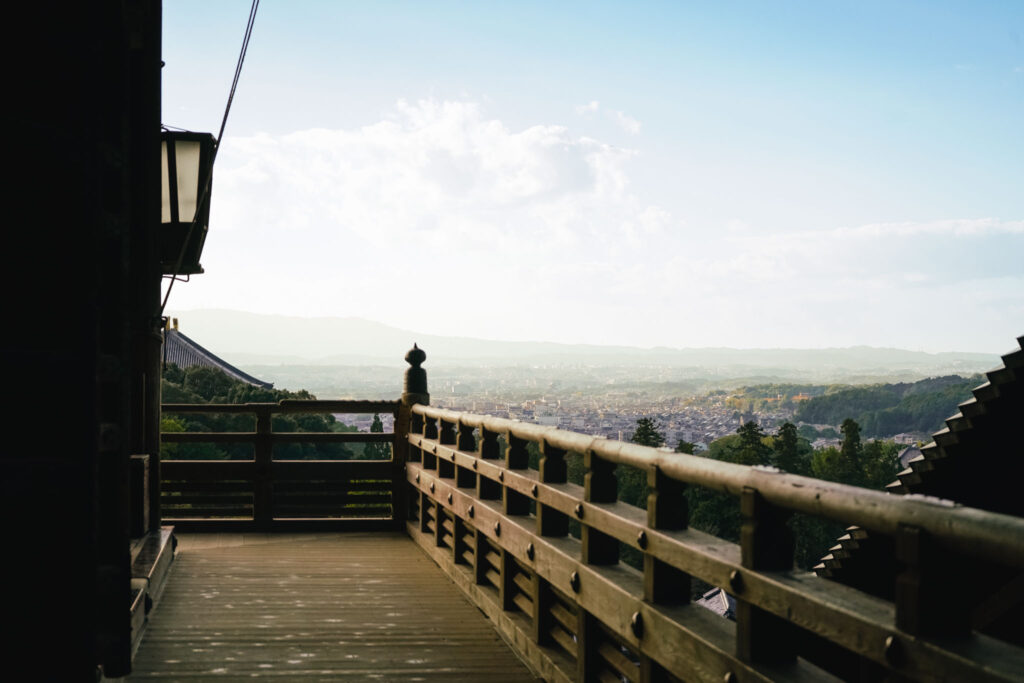
Best known for the fire and water ceremony of Omizutori, the upper part of the complex offers some of the most breathtaking panoramas of the city. Amateur and professional photographers alike gather here daily for sensational sunsets.
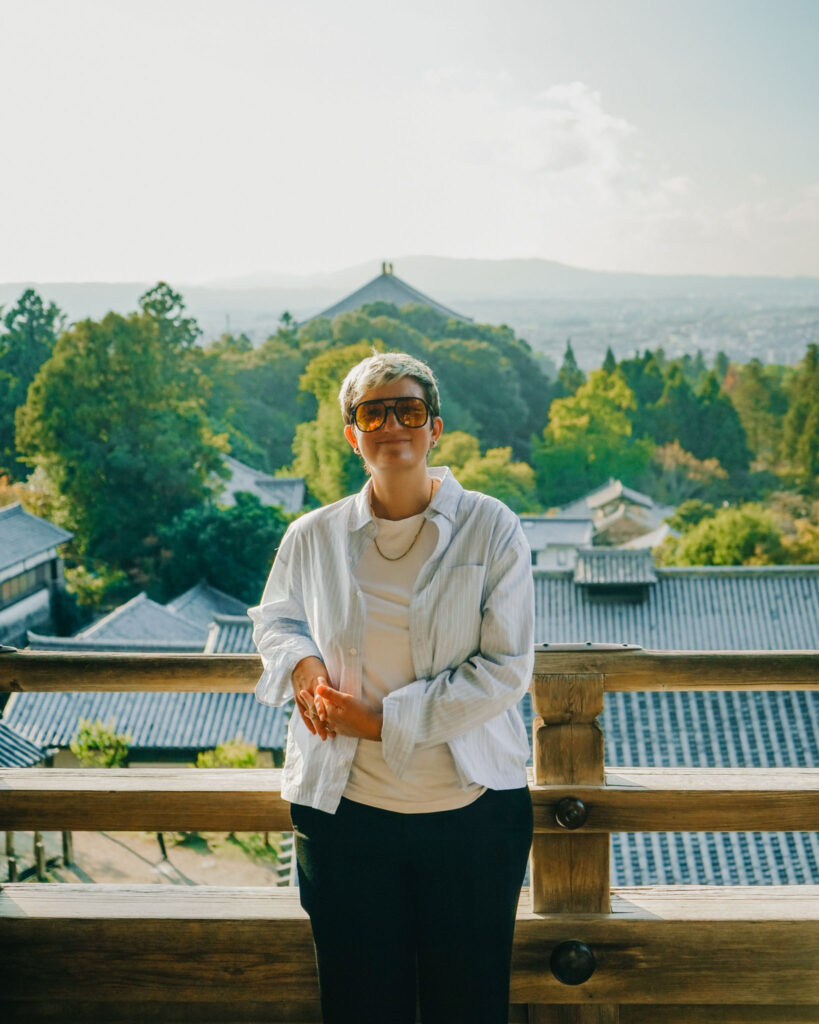
Lastly, if such spectacular sights exhaust you, fret not! Here, you’ll also find a rest area upstairs at Nigatsudo. Free drinks like tea or water flow aplenty for pilgrims and tourists alike. It’s a perfect excuse to take a break from temple hopping in Nara Park.
If you have found this guide helpful, we’d appreciate your support by leaving a comment, sharing, and by following us on our social platforms so this information can find it’s way into the hands of folks who need it most! Thank you!
We’re very happy you may want to use our images. However, all photographs in this blog and on this website are originally produced by us unless otherwise stated. We’d love to share but please contact us for permission before using or distributing.