
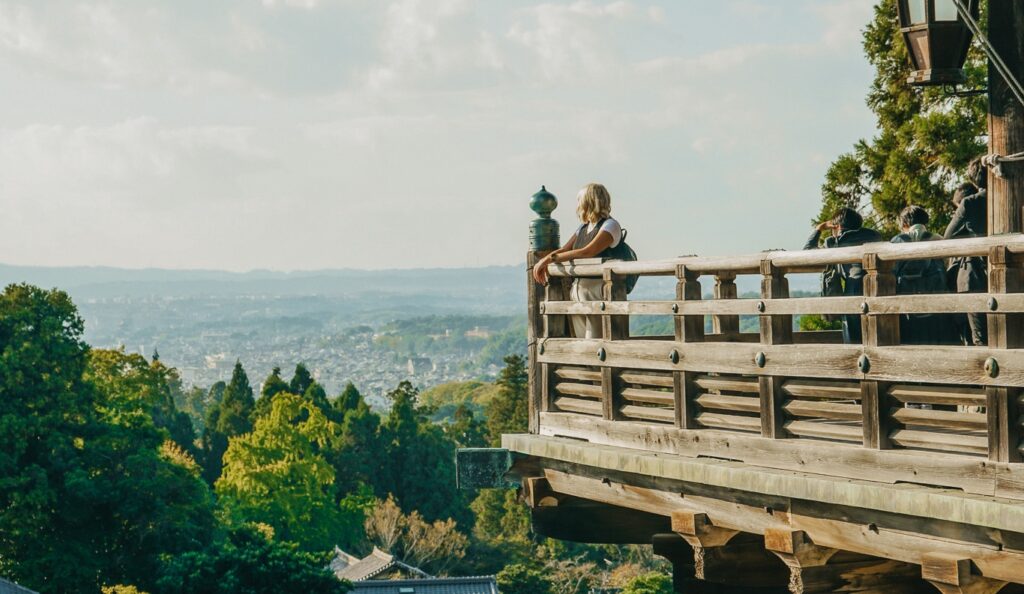
One of the best ways to learn about Japanese culture is to visit a shrine (jinja) or a temple. But what do you do once you’re there? How do you even pray? And what the heck do you do if you receive bad fortune?
It can be intimidating to take part in a foreign country’s practices, so consider us your senpai (mentor)! We’ve broken it down so you can impress even temple monks with such refined etiquette. Here’s everything you need to know before visiting your first temple or shrine in Japan!
Shinto or Buddhist?
First and foremost, what’s the difference between a shrine and a temple? Are they the same? While their history together is complicated, today both religions coexist in Japan and compliment one another.
Going to a shrine is a place of Shinto worship. Shintoism is the indigenous religion of Japan. The belief of the Shinto religion is that there is spirituality in nature and that deities inhabit all things. Gods who live at and oversee the shrines are called kami. In other words, if people revere kami and treat nature with respect, there will be peace and balance.
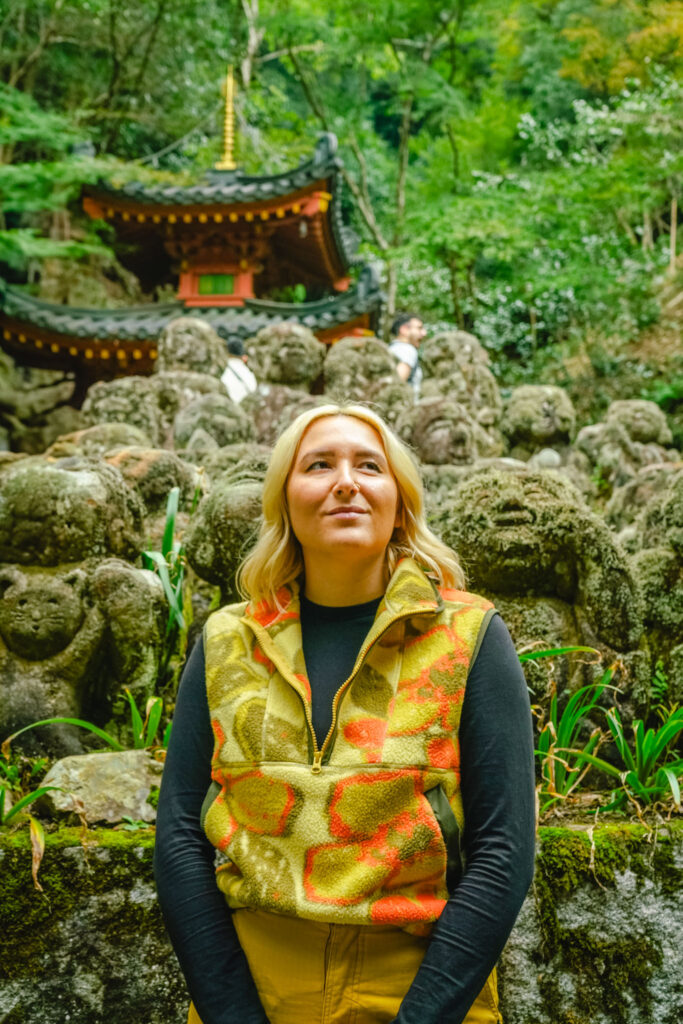
Alternatively, a temple is a Buddhist place of worship. Buddhism comes from mainland Asia and eventually spread to Japan in the early 6th century. It’s both a religion and philosophy that when practiced will lead to enlightenment. In Japan, temples are a place to connect with ancestors who have passed.
Japanese Shrine and Temple Etiquette
Remember, the most important thing when exploring a temple or shrine is to be respectful. As beautiful as these places are, they’re also places of worship.
Wear appropriate clothing and take off hats. Refrain from using raised voices or making a scene. Entering certain temple buildings means removing your shoes, so wear or bring nice socks with you. That is, bring holy socks and not hole-y ones! Keep an eye out for signs in certain areas or buildings that prohibit photos or video. Essentially, don’t do anything you wouldn’t do in a Western religious place of worship.
Unfortunately, an uptick in international visitors also marks an uptick of disrespect. In November 2024, an American tourist defiled part of Tokyo’s Meiji Jingu Shrine, resulting in their arrest. Needless to say, this is a crime that shouldn’t be copycat’d!
Bowing In and Bowing Out
Let’s start at the very beginning! Enter the Japanese shrine or temple by way of its torii gate. Proceed to the side and bow at the threshold before going through. Do not walk along the center of the torii gate because the middle of the path is reserved for the deities.
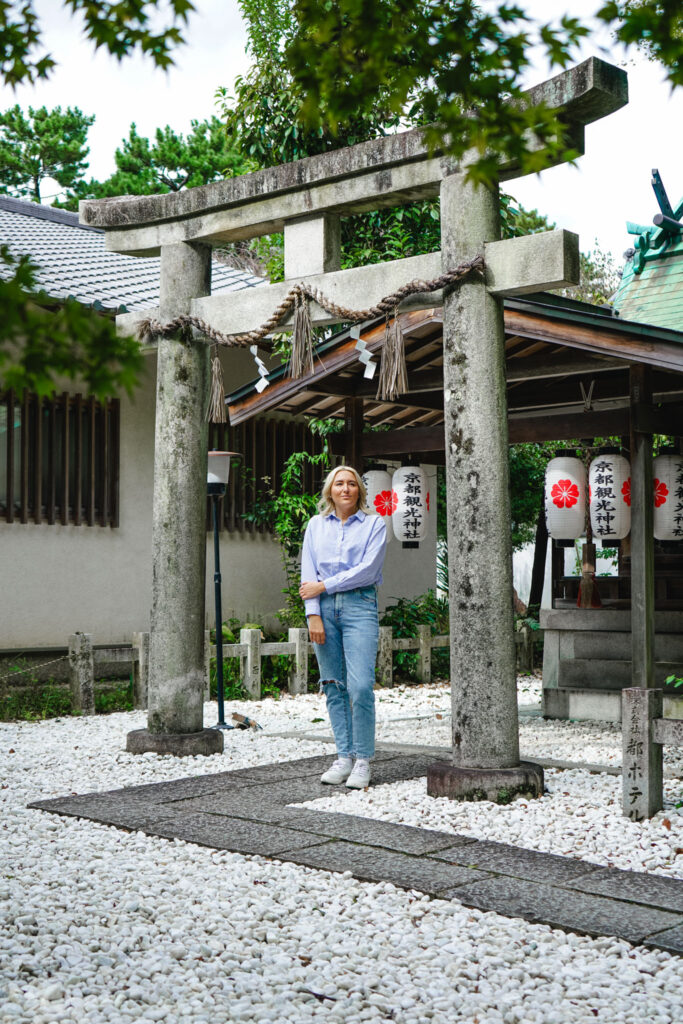
Later, when wrapping up your time on the grounds, make for the torii gate to exit and turn around to bow once more before leaving. Simple enough!
Cleansing at the Temizuya
You wash your hands before doing anything, and going to a shrine or temple in Japan is no exception! You’ll have to cleanse at a temizuya before proceeding further into a sacred space of worship.
Just past the torii gates, you will often see a fountain with several wooden ladles. Cleansing has a very specific order of steps, but you’ll easily commit it to memory after a few times.
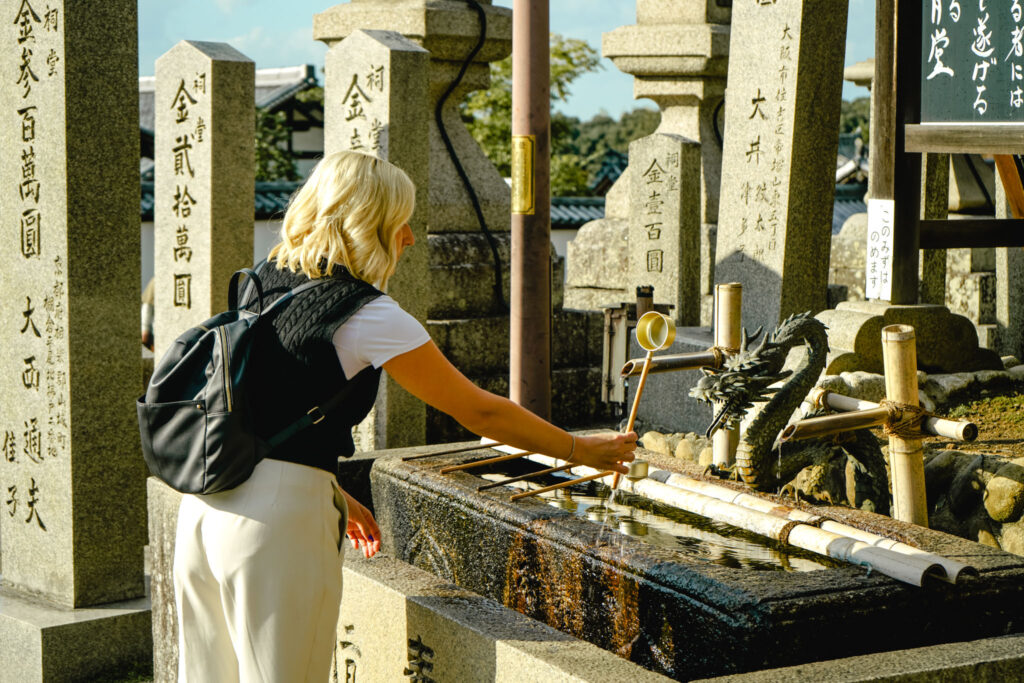
To start, pick up the ladle and fill it with water with your right hand. Pour some water on your left hand, then switch the ladle to your left hand and pour some water on your right hand. Pour water into your left again but this time take it to your mouth and rinse. Do not spit the water back into the fountain but discreetly on the ground around it. Lastly, pour water on your left hand once more and hold the ladle straight up to pour any remaining water back into the fountain.
Praying Like a Local in Japan
Now that you’re cleansed, it’s time to Sanpai, or pray to the resident god. As with many things in Japan, it’s a very ritualistic process that carries hundreds of years of tradition.
If there’s a bell, ring it to make your presence known to the gods. Then, throw an offering into the box, called the saisen-bako. Toss in a 5-yen coin for establishing a connection to the god of a shrine. Whereas at a temple, toss in a 10-yen coin to connect with ancestors and the deceased.
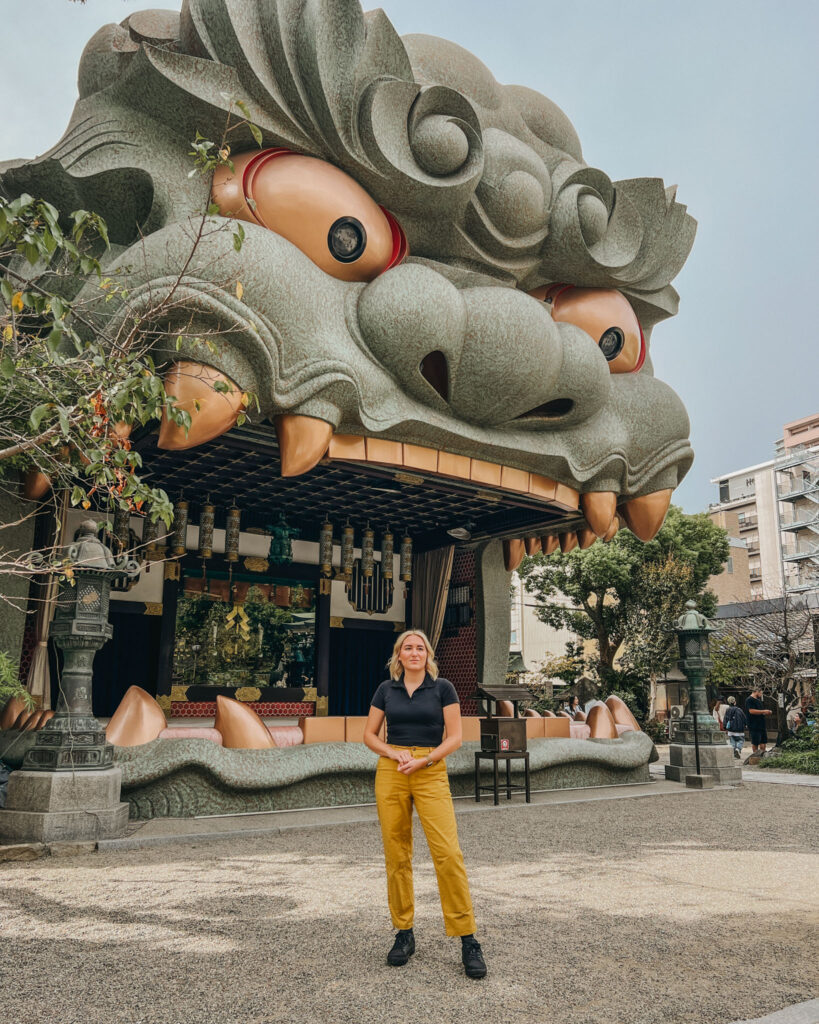
Then, perform the prayer of Ni Rei Ni Hakushu Ippai: 2 bows, 2 claps, 1 bow. Begin your prayer with two bows, followed by two claps. Hold your hands together in prayer and silently pray to the deity. To finish, end the prayer with a bow.
Fortunes: The Good, Bad, and Ugly
On your travels thereafter, you may need some luck, so you best get your fortune told! You can purchase a fortune reading on a paper called omikuji. On your omikuji, your fortune ranges from travel to business to relationships and love.
You can either get a fortune from a dispensing machine or by way of a cylindrical box. For the latter, pay the attendant or monk for the fortune and then give the box a shake. Whatever numbered stick pops out, hand it back for your corresponding numbered fortune.
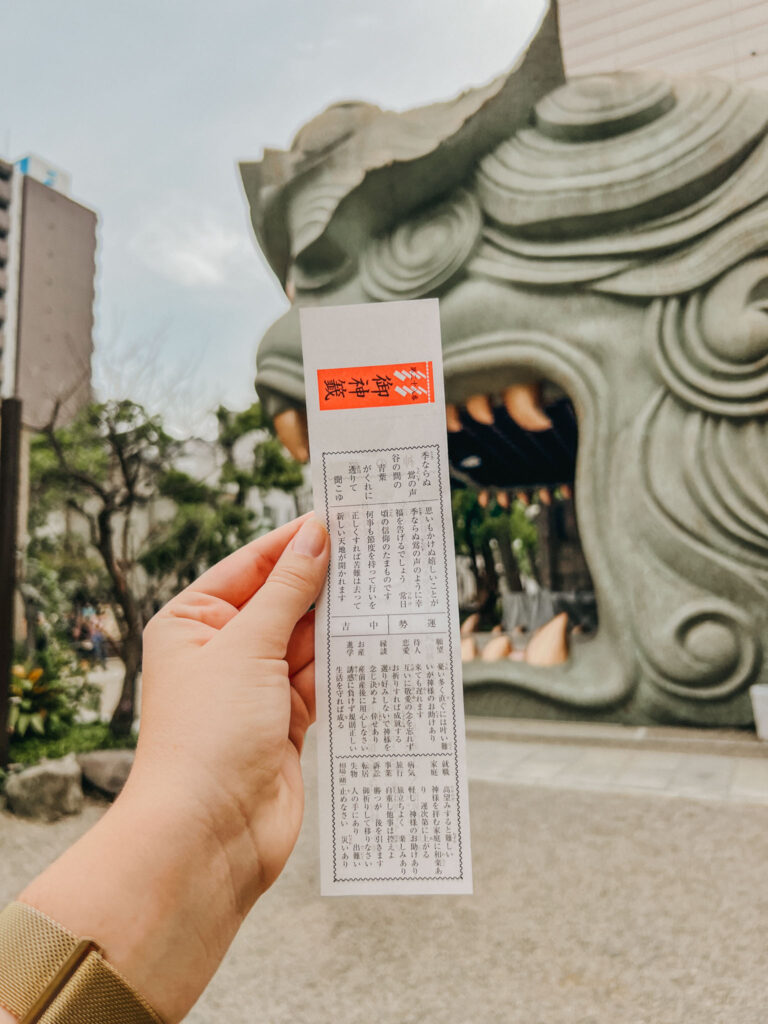
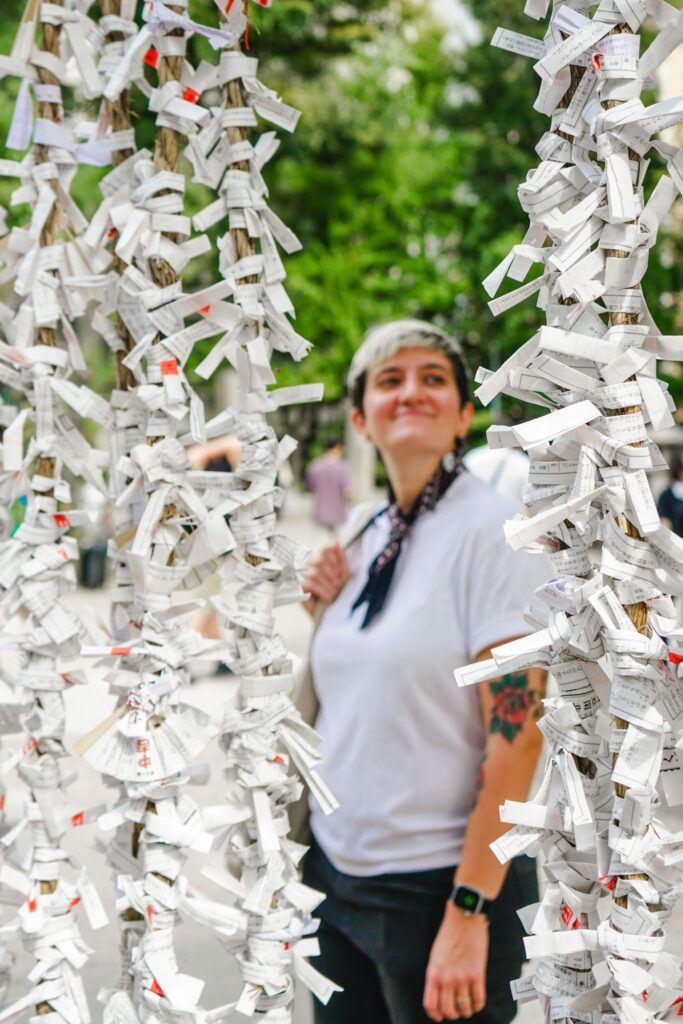
Left: A fortune slip at Namba Yasaka, Osaka | Right: Bad fortunes left behind from misfortunate visitors
Of course, not all luck is good. Your omikuji could result in a bad fortune or even worse, a curse! Even “slightly good luck” was too negative for Alex to keep around. No need to worry, simply fold the fortune until it’s thin enough to tie around a pine tree or a structure to leave it behind. That way, you’ll keep the bad fortune from following you past the shrine. Just be sure to NOT draw another fortune immediately at the same shrine on the same day – that’s inviting all sorts of bad news as you are seen as disregarding the guidance from the gods!
Ema – Prayers You Leave Behind
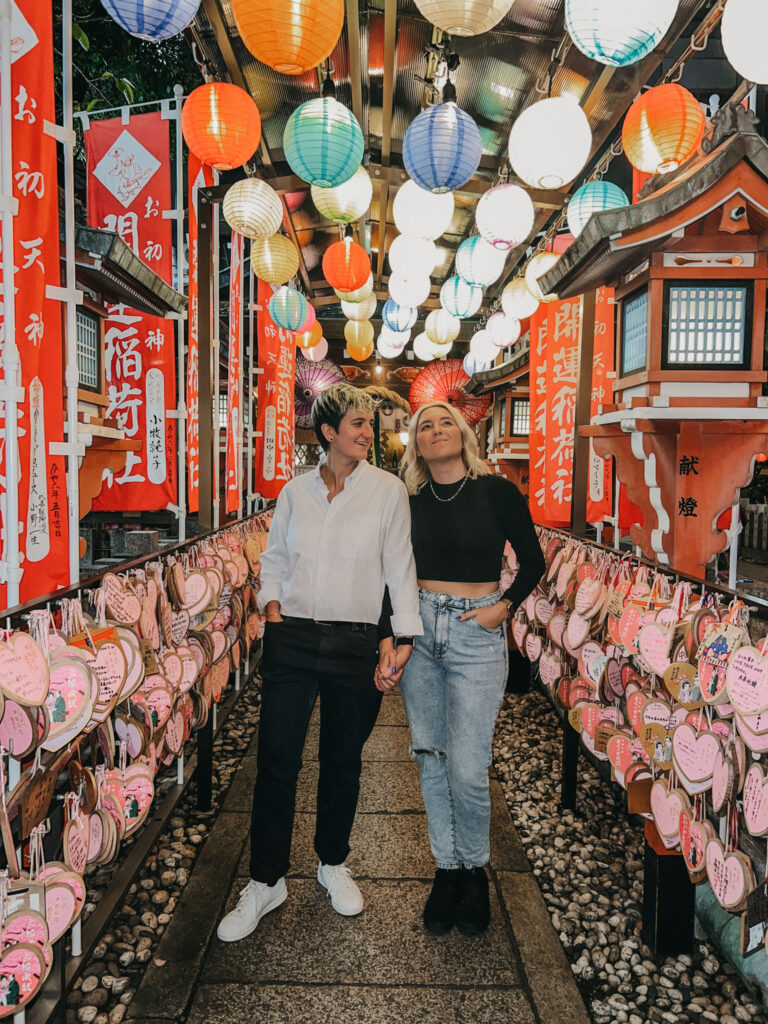
Walking around shrines and temples in Japan, you might notice structures overtaken in hanging plaques. These small wooden panels are called ema and are available for purchase. Each place of worship has their own variety of ema designs that usually feature the animals of the zodiac or what the specialty of the shrine or temple is.
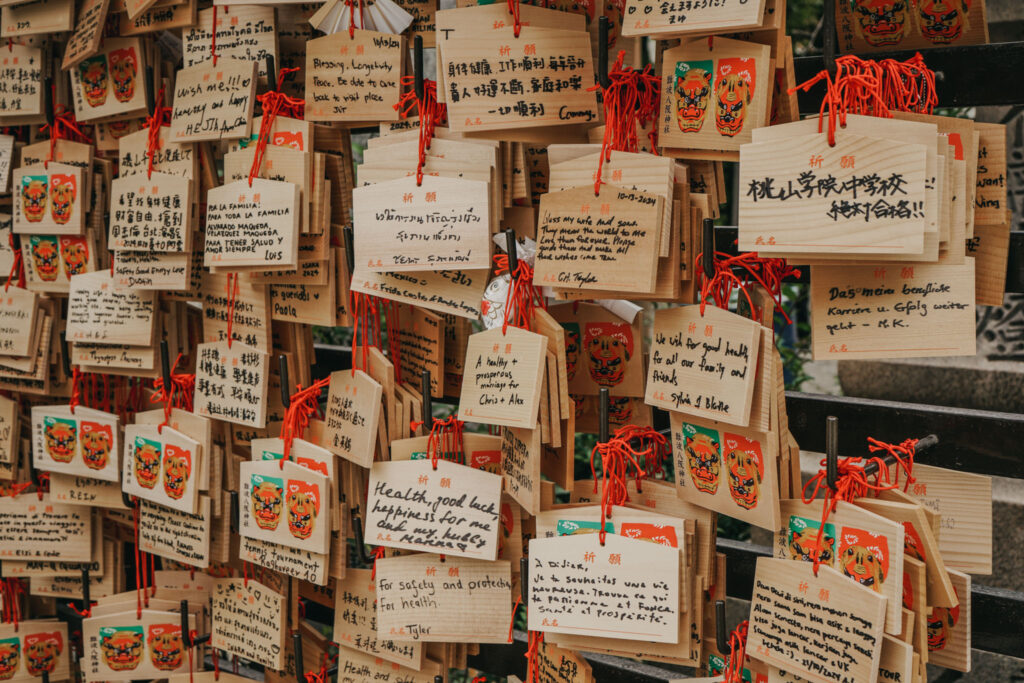
Once you buy an ema of your own, the counter will have either a pen or a marker for you to use. On the back, write your prayer or intention and then hang it up with the rest. It’s a means of communicating your wishes with the kami and those who run the temple.
Of course, not all ema are made of wood and some are very unique! Our personal favorite? The ema of Fushimi Inari Shrine – they were small replicas of the signature red torii gates!
Goshuin – Proof of Pilgrimage
Japan is notorious for its collectables, so would you expect any less at shrines or temples? Getting goshuin is a great way to commemorate your time visiting Japanese places of worship. Goshuin are paper prints meant to indicate the specific pilgrimage you made on that day.
Goshuin vary from shrine to temple, but they all have the same format. Each goshuin has the date of your visit, the specific shrine or temple, and a prayer written in calligraphy. It’s finished off with at least one or more of a stamp seal unique to each place of worship. The cost of a goshuin runs between 300 and 500 yen per seal.
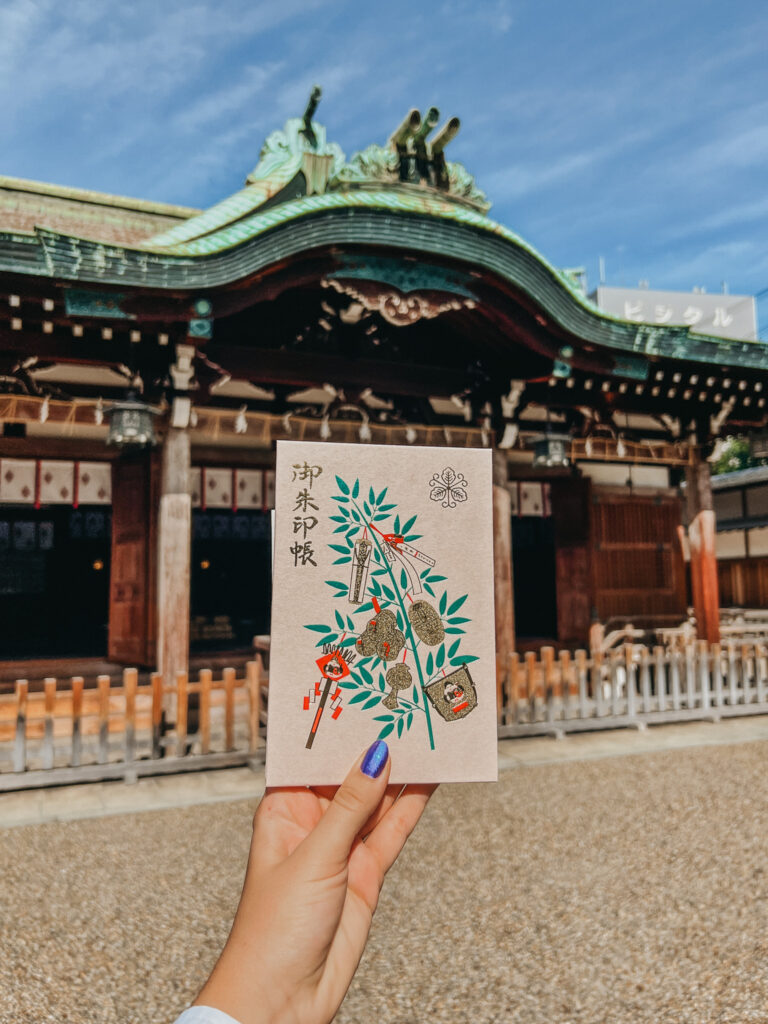
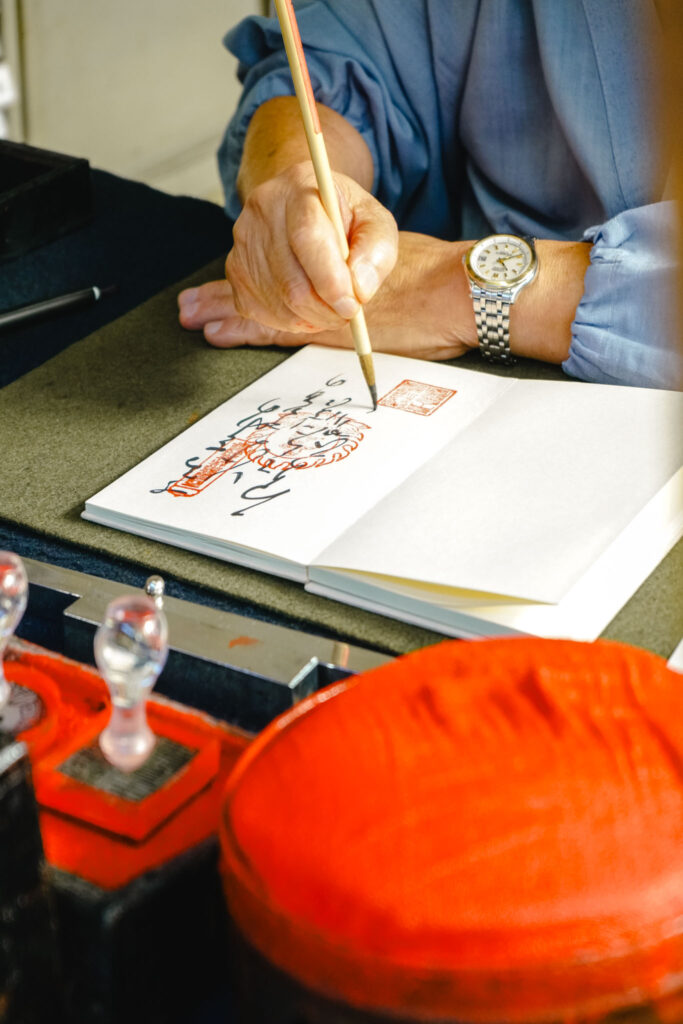
Left: Goshuincho purchased at Imamiya Ebisu-jinja, Osaka | Right: Goshuin created at Nanen-do, Nara
You can keep your goshuin all in one place by also buying a goshuincho, an honorary seal book. It’s an accordion book that can be adorned on the back and front of each page. Purchasing a goshuincho will set you back at least 1500 or 2000 yen and the design varies from where you purchase it. And once you fill it, it’s time to buy another!
Omamori – Blessings on the Go
Fortunately, you can take some blessings on the go with you! Also for purchase at Japanese shrines and temples are omamori, talismans with a specific purpose or blessing. They fit conveniently in your pocket or wallet and make great gifts for loved ones.
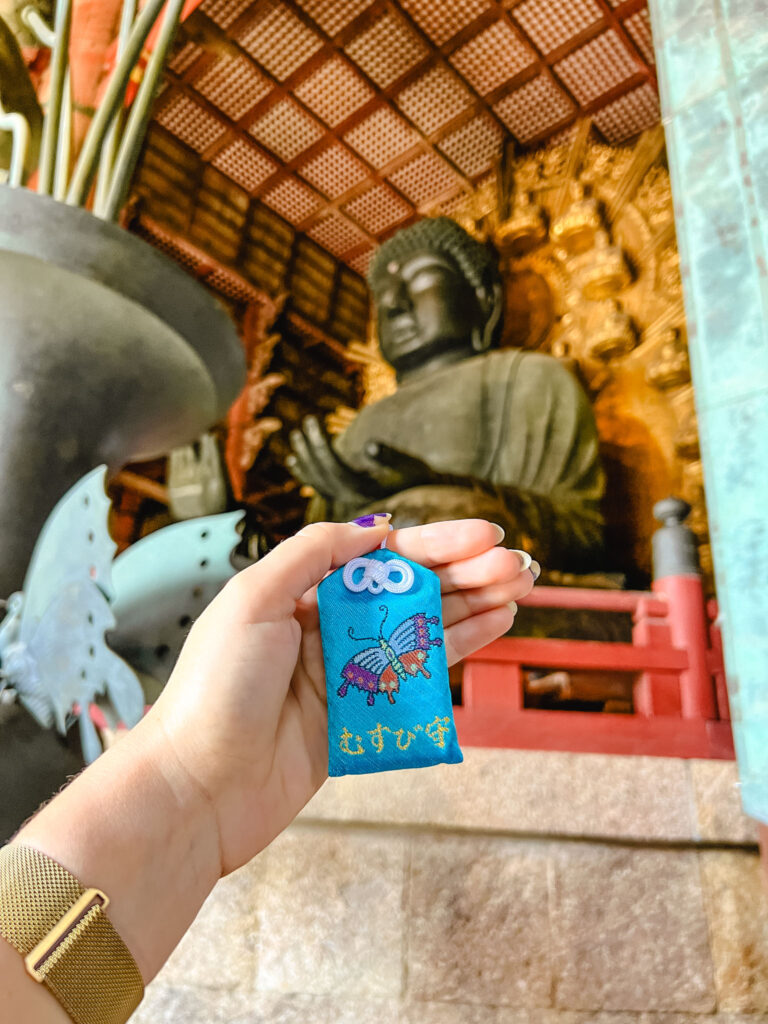
Certain temples or shrines are known for signature blessings, so purchase omamori to echo those specific protections and bring them with you long after departing Japan. Shrines like Tsuyu-no-Tenjinja are especially known for love and fertility, so there you’ll find a number of charms for those purposes.
That and So Much More!
While most, if not all, shrines and temples have all of the aforementioned hallmarks, there are still many other features! Rub the parts of deity statues to heal your own body, like legs or backs. Burn incense as an offering or for healing at other temples. Just remember not to blow out the incense – waft it out with your hand instead!
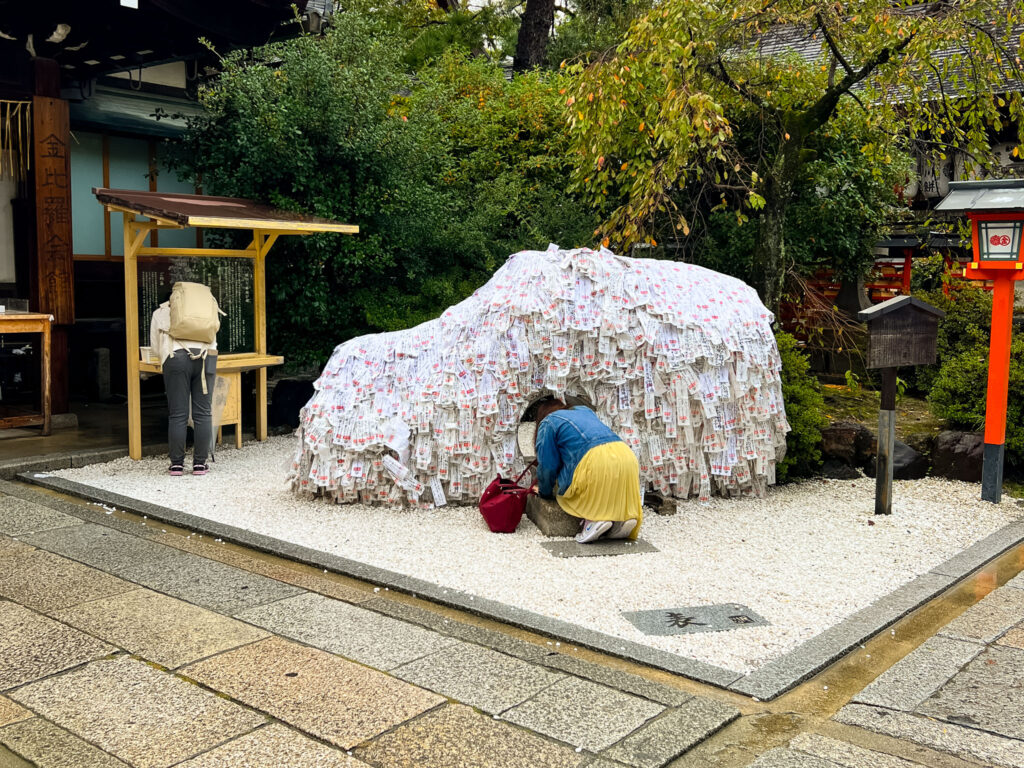
Some places of worship have very nuanced features. For example, take Kyoto’s Yasui Kompira-gu Shrine, where you crawl through a hole in the stone to break off a bad relationship. Or achieve enlightenment in the next life by passing through the pillar the size of the Buddha statue’s nostril at the Todai-ji Great Buddha Temple in Nara.
Remember: it’s okay to not know everything from the get-go, especially as a foreigner! Above all, having a positive, respectful attitude will ultimately set you apart and impress locals. If you don’t remember how to do something, the best course of action is to observe locals so you can do as they do! Respect these places of worship and the blessings will find you! Have fun, be kind, and ganbatte (good luck)!
Want more cultural Japanese experiences? Watch our Youtube video on ryokans!
If you have found this guide helpful, we’d appreciate your support by leaving a comment, sharing, and by following us on our social platforms so this information can find it’s way into the hands of folks who need it most! Thank you!
We’re very happy you may want to use our images. However, all photographs in this blog and on this website are originally produced by us unless otherwise stated. We’d love to share but please contact us for permission before using or distributing.